Weight, diameter and tolerance are the three critical technical specs of weight plates. Understand these numbers and you'll make better buying decisions, save yourself the frustration of loading the bar, and train more precisely. Here's the complete guide for 2026.

The three key numbers at a glance
1. Nominal weight
The stated weight of the plate (e.g. 45 lb).
2. Outer diameter
The outside diameter of the plate. On Bumper Plates it's usually a uniform 450 mm; on Iron Plates it varies and runs smaller.
3. Weight tolerance
The maximum permitted deviation from the nominal weight (given as a percentage or in ounces). The tighter the tolerance, the more precise the plate.
Why weight tolerance matters so much
A big deviation means uneven sides and sloppy reps. On heavy sets, the error adds up.
Benchmarks for 2026:
- Good everyday plates: ±1–2%
- Very good / competition plates: under ±1%
- Cheap no-name plates: often 3% and up
Example: a 45-lb plate with 3% tolerance can be off by as much as 1.35 lb. Across both sides, that adds up noticeably.
Diameter – the underrated factor
Bumper Plates
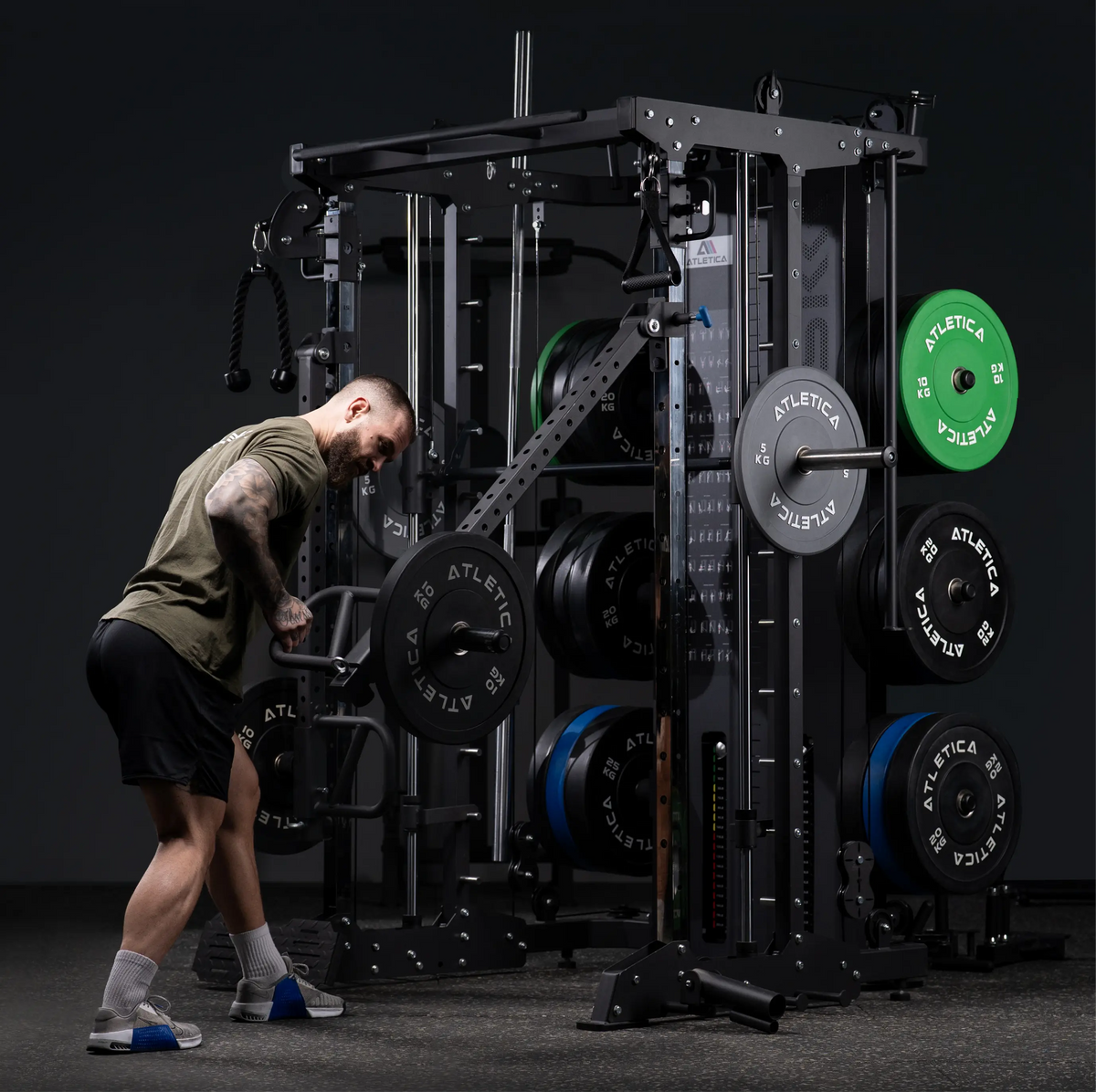
Almost all quality bumpers share the same outer diameter (usually 450 mm), regardless of weight. That makes them easier to handle and gives them consistent drop behavior.
Iron Plates
The diameter grows with the weight. Light plates are noticeably smaller. That means more plates fit on the bar, which is a big advantage on heavy sets.
What that means in practice:
If you move very heavy loads, a pure bumper set will eventually run out of sleeve length. The fix is combining bumpers (outside) with Iron Plates (inside).

Standard bore diameter
On modern Olympic plates, the inner bore diameter is 2" (50 mm).
Anything else (30 mm, 25 mm, etc.) is outdated or built for special systems and isn't compatible with normal Olympic Bars.
Which weight increments do you actually need?
A sensible starter set (approx. 230–350 lb):
- 2 × 55 lb
- 2 × 45 lb
- 2 × 35 lb
- 2 × 25 lb
- 2 × 10 lb
- Optional: 2 × 5 lb and 2 × 2.5 lb (Fractional Plates)
Advanced set:
Add another 2 × 55 lb or 2 × 45 lb plus Fractional Plates for finer jumps (1–2.5 lb).
Fractional / microplates
Small plates (1 lb, 2 lb, 2.5 lb) let you progress precisely, especially on lifts like the bench press and shoulder press.
Bumper vs. iron – how it affects weight and diameter
|
Feature |
||
|
Outer diameter |
Uniform (usually 450 mm) |
Variable, grows with the weight |
|
Thickness |
Noticeably thicker |
Very thin |
|
Loading capacity on the bar |
Limited |
Very high |
|
Weight tolerance |
Often very good |
Variable, tight on good models |
|
Drop-friendly |
Yes |
No |
What beginners need to know
- Buy 2" (50 mm) plates only.
- Look for a tolerance of 2% max.
- A balanced set with 10–55 lb increments matters more than the heaviest possible single plates.
- Add Fractional Plates later.

What advanced lifters and pros should watch for
- Competition plates with the tightest tolerance for precise training and competition.
- A combination of bumpers and Iron Plates for maximum load.
- Check the actual weights regularly (especially on older or budget plates).
- Sticking to one brand and one batch cuts down on side-to-side variation.
Common questions about weight, diameter and tolerance
How accurate do plates need to be?
For everyday training, ±1–2% is plenty. If you want to progress very precisely, aim for under 1%.
Why do all bumpers have the same diameter?
So they behave the same way on a drop and are easier to handle. It's also the Olympic standard.
Can I mix plates from different brands?
Yes, as long as the bore diameter is 2" (50 mm). But you may notice real differences in tolerance and diameter.
What are Fractional Plates and do I need them?
Small add-on plates (usually 1–2.5 lb). They're extremely useful for slow, steady progression, especially on pressing movements.
Are thicker bumpers always worse?
Not worse, but more limiting on very heavy sets. That's why it makes sense to pair them with thin Iron Plates.

Key Takeaways
- Weight tolerance under 2% should be the baseline; under 1% is very good.
- Bumpers have a uniform diameter; Iron Plates are thinner and variable.
- A 2" (50 mm) bore diameter is the current standard.
- A balanced set with sensible increments matters more than extreme single weights.
- Fractional Plates let you progress more precisely.
- Combining bumpers and Iron Plates solves most practical problems.
Your next step
Want plates that stay accurate and practical for the long haul?
With Atletica Iron Plates, Bumper Plates and gripper versions, check the stated tolerance and the 2" (50 mm) standard. That's how you build a clean, future-proof foundation for your training.
Book a free consultation and plan your ideal plate setup with the right increments.